Introduction: What Makes an Insurance Plan “High-Deductible”?
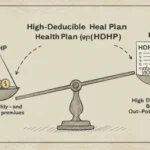
Health insurance in the U.S. comes in many forms, but one of the most discussed—and often misunderstood—is the High-Deductible Health Plan (HDHP). Designed with lower monthly premiums and higher deductibles, HDHPs are increasingly popular, especially among younger and healthier individuals.
But are they right for you? In this guide, we’ll break down how HDHPs work, who they’re best for, and the key advantages and disadvantages of choosing one.
An HDHP is a type of health insurance plan that requires you to pay more out-of-pocket before your insurance starts covering costs. According to the IRS (as of 2025), an HDHP is defined by:
A minimum deductible of $1,650 for individuals and $3,300 for families
A maximum out-of-pocket limit of $8,300 for individuals and $16,600 for families
That means you pay 100% of your healthcare costs until you meet the deductible. After that, insurance kicks in.
2. Why Do People Choose HDHPs?
The main reason is lower premiums. With an HDHP, your monthly insurance cost is usually much lower than with a traditional plan like a PPO.
HDHPs are also compatible with Health Savings Accounts (HSAs), which allow you to save money tax-free to use on healthcare expenses.
3. How Does an HDHP Work in Practice?
Let’s say you have an HDHP with a $2,000 deductible. If you go to the doctor and the visit costs $200, you pay the full $200 because you haven’t hit your deductible yet.
Only after you spend $2,000 out of pocket will the insurance start covering a portion of costs—often 80% (insurance) / 20% (you) until you reach your out-of-pocket maximum.
4. Pros of High-Deductible Health Plans
✅ Lower Monthly Premiums
This is the biggest selling point. You’ll save money each month, which is useful if you rarely visit the doctor.
✅ HSA Eligibility
HDHPs are required if you want to open an HSA—a triple tax-advantaged account:
Tax-deductible contributions
Tax-free growth
Tax-free withdrawals for qualified medical expenses
✅ Great for the Healthy or Young
If you don’t have chronic conditions or high medical usage, you may spend less overall with an HDHP.
✅ Budget Flexibility
You can save the difference in premiums and apply it toward future healthcare costs.
5. Cons of High-Deductible Health Plans
❌ High Upfront Costs
If you do need care, you’ll pay a lot out-of-pocket before insurance helps. Unexpected bills can be a shock.
❌ Not Ideal for Chronic Illness or Frequent Care
People with ongoing medical needs may find HDHPs too costly overall.
❌ Skipping Care
Studies show that people with HDHPs are more likely to delay or avoid care, even when it’s necessary, due to high costs.
❌ Complexity and Confusion
Understanding deductibles, coinsurance, HSAs, and billing can be overwhelming—especially for first-time users.
6. Who Should Consider an HDHP?
HDHPs make the most sense if:
You are young and healthy
You rarely see a doctor
You want to take advantage of an HSA
You’re able to save money for potential medical expenses
However, if you have frequent prescriptions, specialists, or a chronic condition, a traditional PPO or HMO plan may be more affordable in the long run.
7. HDHP vs. Traditional PPO: A Cost Comparison
Feature
HDHP
PPO
Monthly Premium
Lower
Higher
Deductible
Higher
Lower
HSA Access
Yes
No
Out-of-Pocket Costs
Higher (until deductible met)
Lower
Best For
Healthy, infrequent care
Frequent care, chronic illness
The choice often comes down to risk tolerance and financial preparedness.
8. How to Use an HSA with an HDHP
If you choose an HDHP, opening an HSA is one of the smartest moves you can make.
2025 HSA contribution limits:
$4,150 for individuals
$8,300 for families
Additional $1,000 “catch-up” if over age 55
You can use HSA funds to pay for:
Doctor visits
Prescriptions
Dental & vision care
Over-the-counter medications (some require a prescription)
Unused money rolls over each year and can be invested for long-term growth.
9. Key Questions to Ask Before Choosing an HDHP
Can I afford to pay a high deductible out of pocket?
Do I expect high medical costs this year?
Can I contribute regularly to an HSA?
Am I okay with budgeting for surprise medical bills?
If you answered yes to most of these, an HDHP might work for you.
Conclusion: Is an HDHP Right for You?
HDHPs offer flexibility, lower premiums, and HSA advantages, but they also come with financial risk if you need a lot of care. Choosing the right plan depends on your health, lifestyle, and ability to cover high upfront costs.
Hi, I’m Hibiki — the writer behind HealthManual.net.
I cover health insurance news, wellness tips, and insightful analysis of pharmaceutical and healthcare stocks. My goal is to simplify complex topics and make health and finance information more accessible to everyone.
Thanks for reading — I hope you find the content helpful and reliable.